Every spring and autumn here in DuPage County, we see a surge of runners heading out to Waterfall Glen, the Salt Creek Greenway, and Fullersburg Woods with their favorite four-legged training partner at their side. From a physiological standpoint, logging steady aerobic miles with an energetic dog is hard to beat: accountability goes through the roof, perceived exertion drops, and spending time on crushed-limestone forest preserve trails exposes your feet and ankles to healthy, variable proprioceptive stimuli.
Yet in our Oakbrook Terrace treatment rooms, we also treat the predictable orthopedic fallout when human-and-canine mileage ramps up without a biomechanical plan: unilateral low-back flare-ups, proximal hamstring tendinopathy, shoulder impingement from single-arm leash traction, and anterior knee pain on downhill grades. Whether you are training for a half marathon or simply building cardiovascular longevity, protecting both your joints and your dog’s joints comes down to understanding tether mechanics, progressive tendon loading, surface selection, and recovery fueling.
1. Hand-Held Leash vs. Waist-Tethered Canicross Mechanics
When you run while gripping a traditional six-foot leash in your dominant hand, two subtle compensations happen across thousands of strides per mile. First, your arm swing becomes asymmetrical. Normally, contralateral arm swing counterbalances pelvic rotation—when your right leg drives forward, your left arm swings forward to neutralize angular momentum across the lumbar spine. Locking one hand onto a taut leash dampens thoracic rotation on that side and forces your opposite hip abductor and lumbar paraspinals to absorb extra torsional shear.
Second, an unexpected lateral pull—say, a deer or squirrel darting across the trail—applies a rapid eccentric impulse at the end of a long lever arm (your outstretched hand), stressing the rotator cuff and thoracolumbar junction simultaneously.
The Clinical Fix: Switch to a hands-free bungee waist belt positioned low across your pelvis (closer to your center of mass at S2, rather than high around your lumbar waist) paired with a shock-absorbing Y-front running harness on your dog:
- Pelvic Load Distribution: Anchoring the tether across your glutes and iliac crests lets your hip extensors absorb gentle forward traction rather than pulling your lumbar spine into hyperlordosis.
- Restored Arm Swing: Keeping both hands free preserves natural thoracic counter-rotation, improving running economy by 3% to 5% and sparing your neck and upper trapezius from chronic guarding.
- Canine Shoulder Clearance: Ensure your dog wears a Y-shaped chest harness rather than a horizontal chest-strap harness, which restricts scapular protraction and shortens their natural forelimb stride.
2. Tendon Adaptation & the Shared 10% Progression Rule
Cardiovascular fitness adapts far faster than collagenous connective tissue. Both human Achilles and patellar tendons—and canine cranial cruciate ligaments and digital flexor pads—remodel on an 8-to-12-week biological timeline. A fit athlete who transitions abruptly from treadmill or strength blocks to five-mile trail runs with a dog often outpaces tissue capacity.
Before launching continuous mileage, make sure your dog has reached skeletal maturity (growth plates in medium-to-large breeds often do not fully close until 14 to 18 months; always clear endurance running with your veterinarian). Once cleared, progress volume using a structured run-walk cadence:
- Weeks 1–2 (Tissue Intro): Three 25-minute sessions per week alternating 3 minutes of easy conversational jogging with 2 minutes of brisk walking on flat crushed limestone.
- Weeks 3–4 (Cadence Consolidation): Increase running intervals to 5 minutes jog / 90 seconds walk while keeping your step rate near 170–178 steps per minute. Shorter, quicker steps keep your foot strike closer beneath your center of mass—vital if your dog surges slightly on downhills!
- Weeks 5–8 (Volume Expansion): Cap weekly total distance increases at 8% to 10%, inserting a deload week (reducing mileage by 25%) every fourth week so micro-damage in tendons and paw pads remodels into denser, stiffer collagen fibers.
3. Choosing Joint-Friendly Surfaces Across Seasons
Surface stiffness and thermal load affect human and canine athletes differently. Concrete sidewalks deliver high peak vertical loading rates and retain radiant heat long after sunset. Whenever possible, prioritize:
- Crushed Limestone & Packed Dirt Singletrack: DuPage County’s crushed-limestone trail network offers moderate surface compliance that reduces tibial shock while providing predictable footing—without the ankle-rolling ruts of technical rocky mountain trails.
- Thermal Cutoff Discipline: Dogs dissipate heat primarily through respiratory panting and limited eccrine glands in their paw pads, making them far more vulnerable to exertional heat stress above 72°F with Midwest humidity. Shift summer conditioning to 6:00 AM starts, carry electrolyte water for yourself plus plain cool water for your dog, and test asphalt with the back of your hand for seven seconds before crossing parking lots.
4. Two Gym Strength Anchors Every Dog-Runner Needs
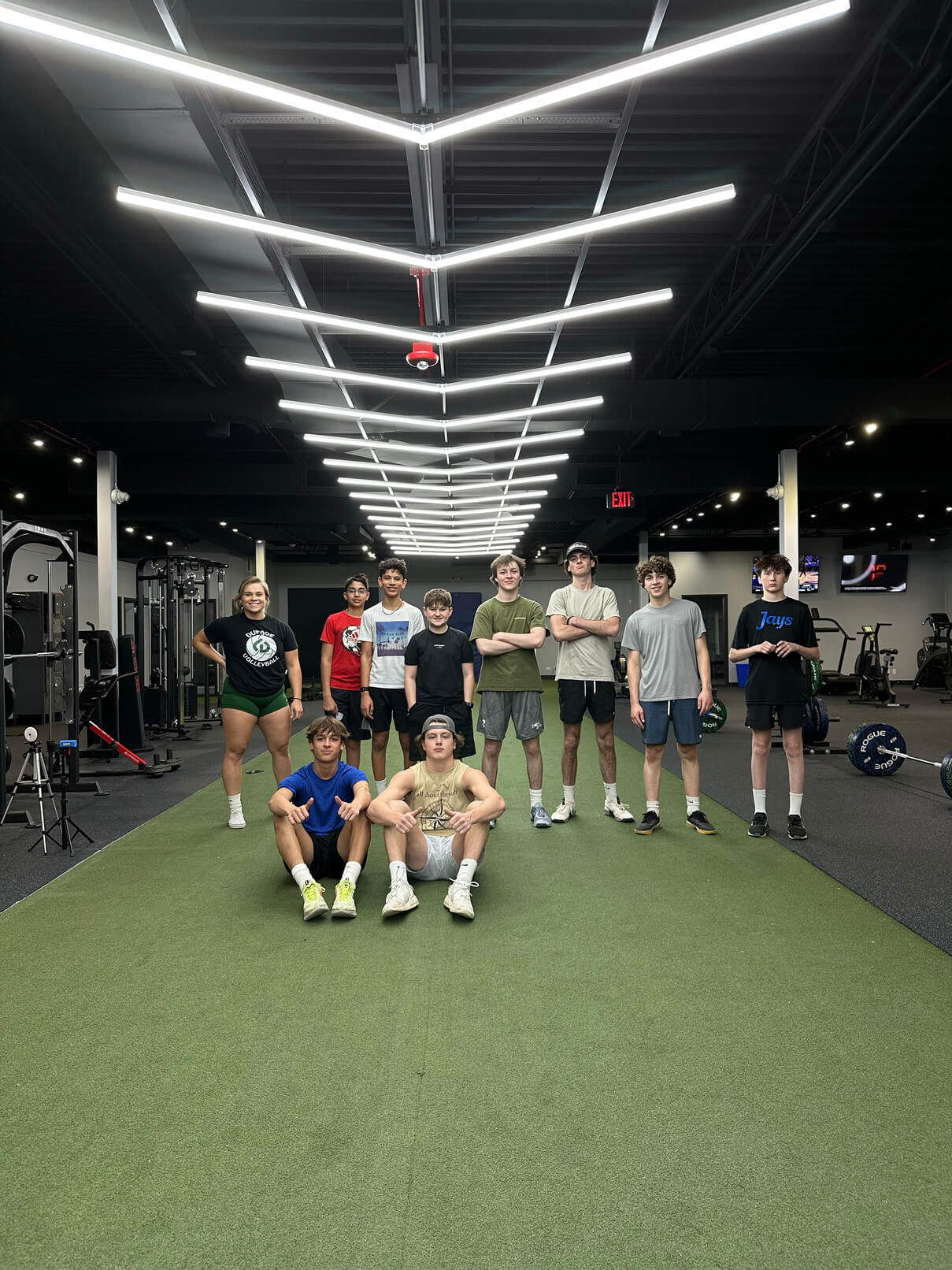
Inside our Performance Training Floor at Synaptyx, we program two non-negotiable strength movements twice per week for runners who log tethered trail miles:
- Heavy Slow Resistance (HSR) Bent- & Straight-Knee Calf Raises: Performing 3–4 sets of 8–10 slow, 3-second-eccentric reps builds soleus and gastrocnemius stiffness—your primary shock absorbers during trail descents.
- Anti-Rotation Pallof Presses & Single-Leg Romanian Deadlifts: Training your core and posterior chain to resist sudden rotational perturbations prepares your hips and spine for uneven trail camber and mid-stride directional changes.
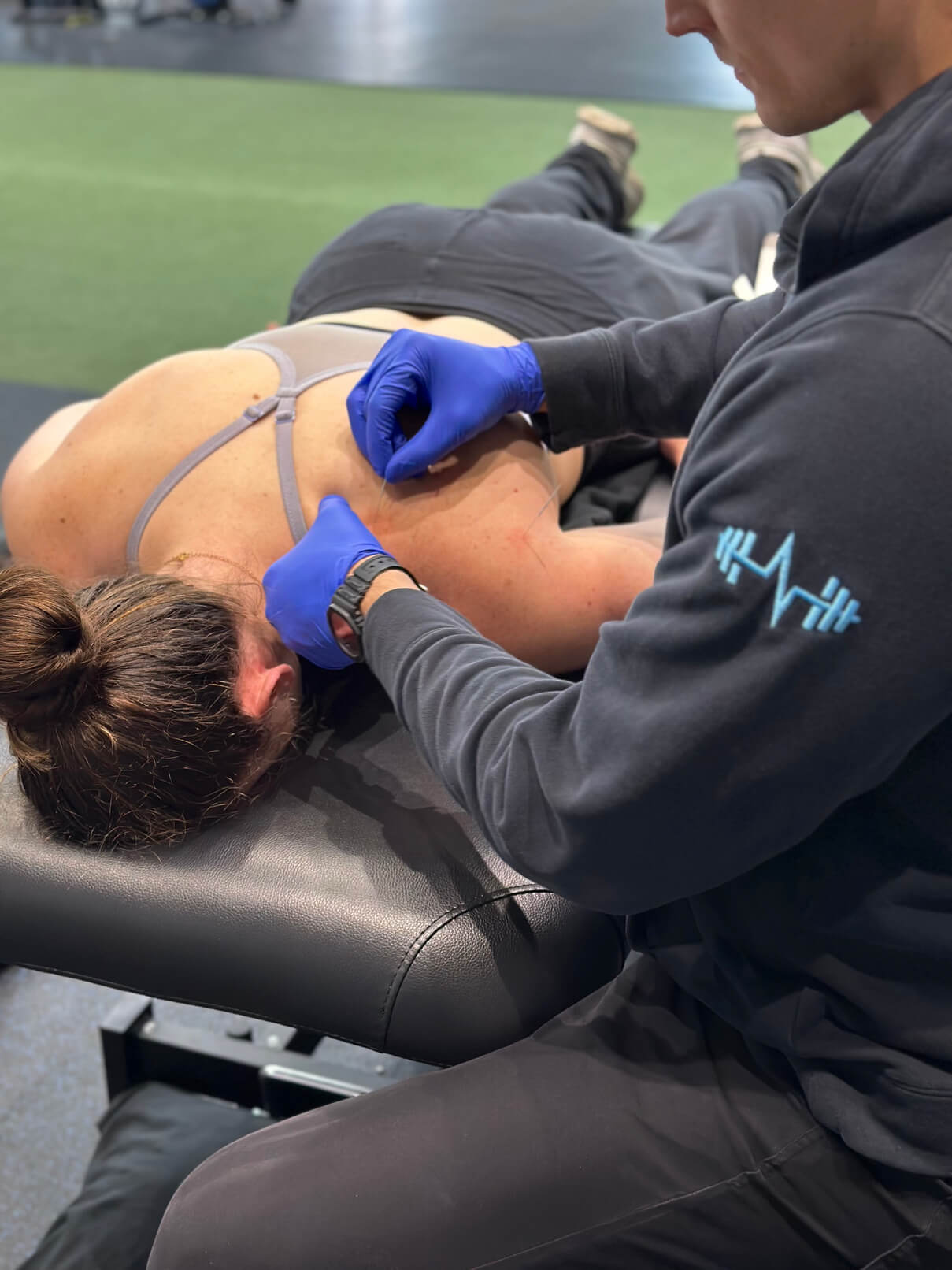
If you notice early morning heel stiffness, outer-hip tightness, or asymmetric stride wear on your running shoes, scheduling a physical therapy movement assessment early allows us to address hip-pelvic mechanics with targeted loading and dry needling before a minor irritation sidelines your season.
5. Fueling & Body Composition Longevity for Both Athletes
Just as human endurance athletes adjust carbohydrate and protein intake around training blocks to prevent Relative Energy Deficiency in Sport (RED-S), active trail dogs experience significant shifts in daily energy expenditure. Conversely, one of the strongest evidence-based predictors of canine joint longevity—reducing lifetime hip and knee osteoarthritis stress—is maintaining a lean, athletic body condition score rather than guessing portion sizes by eye.
As your weekly mileage climbs from casual neighborhood walks to 15+ miles of weekly trail conditioning, dial in your training partner’s baseline and active-day intake using a dedicated Dog Daily Calorie & Nutrition Calculator alongside your vet’s guidance, and avoid feeding large meals within 90 minutes before or 45 minutes after hard running—especially in deep-chested breeds—to protect digestive safety. And when the two of you cross a milestone finish line or capture an epic muddy post-trail grin out on the preserve, celebrate that bond by sharing your favorite snapshot in America’s Top Pup $10,000 Photo Contest & Custom Pet Portraits.
Train Smarter for the Long Run: Longevity isn’t built in a single heroic Saturday long run—it’s built by stacking pain-free months year after year. Meet our clinical and strength coaching team or book an initial performance evaluation at our Oakbrook Terrace facility to build a custom durability plan.