At Synaptyx Health & Performance in Oakbrook Terrace, a large percentage of our patient roster consists of entrepreneurs, corporate executives, medical professionals, and self-employed S-Corporation owners who view physical durability as a core career asset. When your livelihood depends on high cognitive output, travel stamina, and staying pain-free, waiting until an orthopedic issue requires surgery is the most expensive health strategy imaginable.
Yet every January and April, patients ask our front desk the exact same financial questions: “Can I swipe my HSA or FSA card for physical therapy and chiropractic visits?” “When does corrective performance training require a Letter of Medical Necessity?” and “How should my S-Corp handle medical and rehabilitation expenses cleanly?” Below is a practical, plain-English 2026 educational breakdown of how clinical care, pre-tax accounts, and smart tax documentation work together.
Note: Synaptyx provides clinical physical therapy, chiropractic medicine, and performance coaching—not legal or tax advice. Always confirm account-specific tax treatment with your CPA or benefits administrator.
1. What Automatically Qualifies for HSA & FSA Funds Under IRS Rules
Under IRS Publication 502, funds inside a Health Savings Account (HSA) or Healthcare Flexible Spending Account (FSA) can be used tax-free for qualified medical expenses aimed at the diagnosis, cure, mitigation, treatment, or prevention of a specific disease or musculoskeletal condition.
In an integrated clinical facility like Synaptyx Health & Performance, the IRS draws a clear line between licensed clinical care and general fitness:
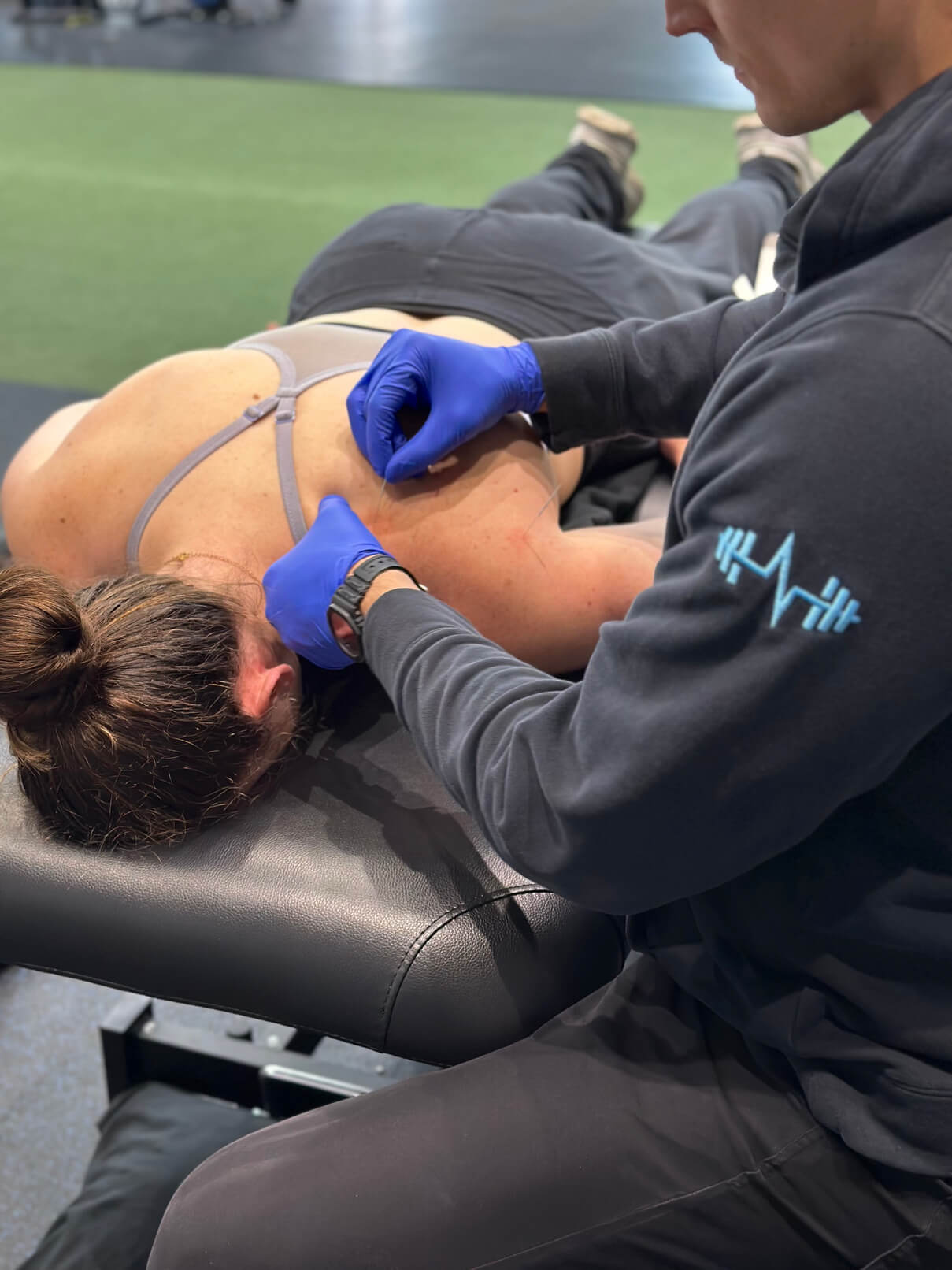
- Directly HSA/FSA Eligible (No Extra Letter Needed): Licensed Physical Therapy evaluations and treatment sessions (including therapeutic exercise, manual therapy, post-surgical rehab, and return-to-sport rehab), licensed Chiropractic Medicine assessments and spinal/extremity adjustments, integrative dry needling performed as part of a clinical plan of care, and insurance copays, coinsurance, or deductibles.
- General Wellness (Not Directly Eligible Without Medical Necessity): Standalone personal training packages, sports performance group sessions aimed solely at athletic speed/vertical jump, or general gym memberships for overall fitness.
2. Illinois Direct Access & Combining Insurance With HSA Dollars
One of the biggest misconceptions keeping DuPage County patients in pain longer than necessary is assuming they must wait three weeks for a primary-care visit just to obtain a physical therapy script. Under the Illinois Physical Therapy Act (Direct Access), patients can schedule directly with a Doctor of Physical Therapy for evaluation and treatment without a physician referral (with the exception of traditional Medicare plans, which still require physician plan-of-care certification; see our clinic insurance FAQ for details).
If you carry a High-Deductible Health Plan (HDHP) through BCBS, Aetna, or United/UMR—which makes you eligible to contribute pre-tax dollars to an HSA—paying early-year PT or chiropractic deductibles through your HSA effectively discounts your out-of-pocket clinical investment by your combined federal, Illinois state (4.95%), and payroll marginal tax rate—often 30% to 42% in real purchasing power.
3. How a Letter of Medical Necessity (LMN) Bridges Rehab & Corrective Exercise
What happens when acute pain subsides, your formal insurance-covered PT episode concludes, yet you still have a documented clinical diagnosis—such as lumbar disc herniation, hip femoroacetabular impingement, post-ACL reconstruction asymmetry, or metabolic syndrome—requiring structured, supervised therapeutic conditioning or nutritional intervention to prevent recurrence?
That is precisely where a Letter of Medical Necessity (LMN) applies. An LMN is formal clinical documentation signed by a licensed physician or qualified healthcare practitioner certifying that a specific intervention is prescribed to treat or mitigate a diagnosed medical condition—not merely for general health or recreation.
What an Audit-Ready 2026 Letter of Medical Necessity Must Include:
- Patient Identification & Specific ICD-10 Diagnosis Code(s): For example, lumbar radiculopathy, rotator cuff tendinopathy, or knee osteoarthritis.
- Clinical Rationale: A concise explanation of how the prescribed corrective exercise, neuromuscular re-education, or clinical nutrition protocol directly treats or mitigates the diagnosed condition.
- Defined Duration & Frequency: Most HSA/FSA third-party administrators require an LMN to specify a finite treatment window (typically up to 12 months before clinical re-evaluation and renewal).
- Itemized Superbill / Receipt Retention: Keep itemized clinic receipts showing dates of service, provider credentials, and service descriptions alongside your LMN in your digital tax folder.
4. S-Corporation Owners: Avoiding Common Health & Wellness Write-Off Mistakes
Because Oakbrook Terrace sits at the crossroads of Chicagoland’s suburban business corridor, many of our patients operate their own S-Corporations—consulting firms, medical/dental practices, real estate brokerages, trades businesses, and tech agencies. A frequent mistake S-Corp founders make is swiping the corporate business credit card directly for personal physical therapy, chiropractic care, or athletic training and categorizing it loosely under “office wellness” or “continuing education.”
For greater-than-2% S-Corporation shareholders, IRS rules around health insurance, HSA contributions, and medical reimbursements follow strict W-2 inclusion and deduction reporting mechanics (Form 1120-S / Schedule K-1 / Form 1040 Schedule 1) so you preserve above-the-line tax deductions without violating ACA group health plan rules. Business owners exploring compliant structures—such as properly reported 2% shareholder health plans, HSA funding workflows, QSEHRA/ICHRA setups for non-owner staff, and broader entity tax optimization—can review practical breakdowns on the River Taxes small-business tax strategy blog or schedule a dedicated tax planning consultation with a CPA team before year-end payroll closes.
5. Your 4-Step Action Plan Before Booking Care
- Step 1 — Verify Your Benefits or HDHP/HSA Balance: Check whether you want to bill in-network coverage (we accept BCBS, Aetna, United/UMR, and Medicare) or utilize cash-pay / HSA reimbursement transparency.
- Step 2 — Request Itemized Clinical Documentation: Every clinical visit at our Oakbrook Terrace facility generates clear, itemized documentation separating licensed PT and chiropractic codes from optional non-clinical services.
- Step 3 — Keep Your HSA Invested or Working Strategically: Unlike FSAs (“use-it-or-lose-it”), HSA balances roll over indefinitely—allowing you either to pay current rehab expenses tax-free today or archive your itemized PT receipts + LMN for tax-free reimbursement later.
- Step 4 — Address Pain Before Compensation Patterns Lock In: Four targeted sessions catching a shoulder or low-back restriction early consistently cost less—in both time and HSA dollars—than twelve weeks of late-stage rehab.
Ready to Invest in Pain-Free Performance? Whether you are recovering from surgery, resolving desk-and-travel back pain, or transitioning from rehab back to heavy barbell work, book your evaluation at Synaptyx Health & Performance or call our Oakbrook Terrace team at (630) 320-6932.